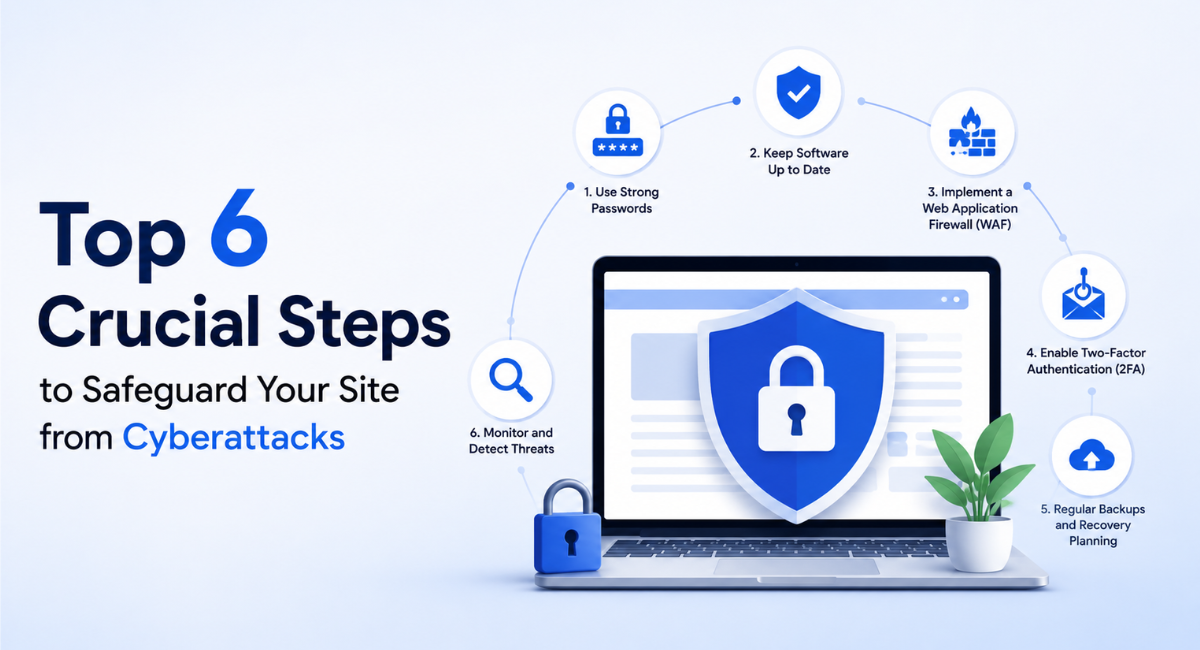
Even if you have a business website, an e-commerce online shop, or a corporate portal, it is crucial to be proactive. We will dive deeper into the top six crucial steps you have to take to safeguard your site from cyberattacks and maintain your online identity secure in this blog.
1. Ensure you have the latest software on your website. Use the most current software for your website.
The most common reasons for any site to be hacked are having outdated software. Outdated CMS platforms, themes, and plugins are vulnerable to attacks. Older CMS platforms, themes, and plugins may harbor hacker vulnerabilities.
Always ensure that:
- Your CMS is continually updated.
- Upgraded Plugins and Themes are available.
- When they are no longer used, they are removed.
- The patches for security vulnerabilities are applied in real time.
A Website design Company in Pune can handle your website reforms, monitoring, and maintenance to help minimise dangers and boost general performance.
2. Cross-link accounts to minimize the risk if one is compromised
If your password is weak, a hacker will be able to gain access to your website more easily. Simple passwords, easy to guess, are what many cyberattacks are based on.
Here are a few tips and tricks:
- Use long and complicated passwords.
- Use a different password for each site!
- Change passwords regularly
- Turn on Multi-Factor Authentication (MFA)
MFA provides an additional level of security by requesting users to confirm their identity using another authentication method, like a mobile OTP or authentication app.
3. Install an SSL Certificate
An SSL certificate encrypts the information users share with your site. Cybercriminals target websites without SSL security more often, and customers rarely trust those websites.
The advantages of SSL are:
- Secure data transmission
- Improve your site’s ranking on the web. Boost website position on web search.
- Increased customer confidence
- Secure from data theft.Data protection against data theft.
Nowadays, most of the secure websites are using HTTPS rather than HTTP. A trusted Website Development Company in Pune can assist you in implementing SSL suitably and guarantee total security of your site.
4. Regularly Back Up Your Website
With all the good security measures, there can be a cyber attack. Regular site backups will prevent any of your valuable information from going “lost for good.
Here are some elements of a backup plan you should include:
- This will ensure a daily or weekly backup of your data.
- Cloud-based backup storage
- Automatic backup systems
- Backup and restore tests and checks.
If your site suffers from hackers or crashes for some reason, backups will be extremely useful in getting your site up and running again in a minimum of time.
5. Use a secure Web host. Make sure to use a secure web hosting provider.
Your website hosting provider is instrumental in website safety. Hosting services that aren’t of good quality may not provide appropriate protections, leaving your site at risk for internet attacks.
Consider hosting companies that provide:
- Firewall protection
- Malware scanning
- DDoS protection
- Regular server monitoring
- Automated backups
A dependable hosting platform means that there are minimal chances of hacking and maximum stability of the websites.
6. Perform routine security assessments.
Conducting regular security audits is an effective way of preemptively discovering vulnerabilities prior to hackers exploiting them. Security testing can help businesses identify suspicious activity, outdated software, and poor configurations.
A Comprehensive Website Audit will include:
- Malware scanning
- Plugin vulnerability checks
- Broken link analysis
- User access review
- Database security inspection
By collaborating with a WordPress Website Development Company in Pune, your website stays secure at all times, as they monitor and evaluate its security levels and optimize it accordingly.
Final Thoughts
It’s time that businesses are taking cybersecurity seriously. Keeping your customer information safe, enhancing your brand reputation, and ensuring uninterrupted business operations—the secure website keeps all of this intact. In summary, it’s not difficult for companies to mitigate website security and reliability risks by following the six steps outlined above.
Whether it’s ensuring the application is up to date, password protection, regularly checking audits, or switching to secure hosting, each measure helps make online more secure. Security for a website is not something that can be taken lightly now; it can cost you large sums further down the road.